

- 0
- 1,083 word
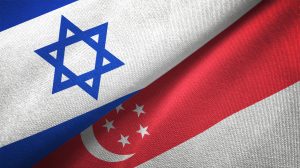
When Singapore gained independence in 1965, it had no army, few resources, and limited room for error. Other countries turned down its requests for military assistance. Israel did not. That history still has relevance as Singapore’s leaders have repeatedly recognized the contribution Israel made at a time when its existence was in jeopardy.
Over the decades, the relationship expanded from the original defense collaboration to a broader relationship in technology, cybersecurity, research and the life sciences. In 2025, however, Singapore took an unprecedented step: four Israelis faced financial sanctions and travel bans for “egregious acts of extremist violence” against Palestinians in the West Bank, according to the Foreign Ministry.
That decision did not amount to a rupture with Israel, nor did it wipe away the historical appreciation that’s always been a factor in the relationship. Instead, Singapore is communicating that friendship is not synonymous with remaining silent when Israeli actions are at odds with Singapore’s expressed positions on international law and a two-state solution.
Following Singapore’s independence from Malaysia in 1965, the government of Lee Kuan Yew sought assistance from several nations in the development of its military. Israel responded by surveying the island with its advisers and structuring a master plan for building up the Singapore Armed Forces from scratch, namely the “Brown Book.” Singapore’s national service system was also heavily inspired by the Israeli model. This assistance was crucial to the fledgling city-state, as it came at a time when Singapore was at existential risk.
However, for decades, Singapore’s relationship with Israel was a tightly guarded secret. Overt defense cooperation with Israel was a sensitive subject in Southeast Asia, especially the Muslim world, and Singapore knew that such a move could cause tensions with its neighbors. The initial relationship was therefore not explicitly advertised, and political restraint was needed as well as strategic skill. Singaporean officials even referred to the Israeli military advisers who arrived to help build the Singapore Armed Forces by the code name “the Mexicans.”
That tension never went away, although it took a different shape over the decades. In 2025, Singapore’s sanctions on four Israelis once again called attention to the limits of the relationship. The four targeted had been connected to settler violence in the West Bank. Singapore’s stance was unambiguous: Israeli settlements are a violation of international law; their expansion is making a two-state solution more difficult; and acts of settler violence must be contained, with the perpetrators held accountable.
Beyond the sanctions, Foreign Minister Vivian Balakrishnan said that the recognition of a Palestinian state was a question of “when, not if,” while outlining conditions for a Palestinian government, including its acceptance of Israel’s right to exist and rejection of terrorism. Singapore sought to back both Israel’s survival and statehood for the Palestinians, while condemning settler violence and supporting a negotiated two-state solution. Together, these positions embody Singapore’s approach to diplomacy as a small nation.
International law is not an abstract preference for Singapore. A system where a larger or more powerful state can act without compunction is always dangerous for a small state. In February 2026, Balakrishnan made that argument in Parliament, saying, “On some issues, we will have to say ‘no’ and to do so courteously, respectfully, and constructively, but nevertheless to stand firm and say ‘no.’ This is not about choosing sides, but about upholding principles and making a careful assessment of Singapore’s long-term national interests.” He connected that to Singapore’s stance in other international conflicts and a broader condemnation of “might is right.” The foreign minister finally concluded: “If we ever lose the ability to say ‘no,’ then that is the day that Singapore loses our relevance and indeed, our independence.”
One the examples Balakrishnan cited was Singapore’s stance on the Israel-Gaza conflict. Singapore wants to rely on international law for its own security; it is difficult for it to stand up for these rules in one war and treat them as bargaining chips in another. The sanctions thus align with a foreign policy tradition, wherein Singapore has kept important ties alive without losing the capacity to disagree with its partners.
Principle, however, is only part of the equation. Singapore sits alongside Muslim-majority Malaysia and Indonesia, which do not recognize Israel. In those states, the Israel-Palestine conflict resonates enough to become a key domestic concern. Muslim Singaporeans are especially attached to the Palestinian cause for religious, humanitarian, and communal reasons, but there is also widespread sympathy for Palestinian suffering across all racial and religious groups.
The government has been determined to ensure that those feelings are not allowed to boil over into public polarization. In July 2026, Singaporean police investigated two members of the British band Massive Attack after they showed a Palestinian flag and shouted “Free Palestine” during their concert. The musicians were given stern warnings and were not allowed to re-enter Singapore, with the authorities citing concerns over racial and religious harmony.
The episode showed another part of the Singaporean tightrope. Although pro-Palestinian sentiment is deep-rooted in some sections of society, the government will still make efforts to tightly control the expression of foreign political causes in the local public sphere.
Meanwhile, Singapore’s ties with Israel have grown beyond the initial defense dimension. Singapore has been a regional hub for Israeli companies, and bilateral cooperation has expanded in technology, cybersecurity, life sciences, and industrial research and development. That relationship has pragmatic reasons to continue too, which is why neither side is likely to make a dramatic break. This, too, explains Singapore’s measured reaction. Note that the sanctions targeted individuals rather than the Israeli government or state, while Singapore also stopped short of formally recognizing a Palestinian state, a step b10 countries – including Australia, Canada, France, and the United Kingdom – took in the fall of 2025.
That said, Singapore is redefining the conditions of the relationship with Israel. While historical gratitude is still relevant, it will not prevent public criticism of Israeli policies when Singapore feels they breach international law or jeopardize a two-state solution.
Singapore’s ties with Israel have been built on a history that very few other Asian countries can boast. That history is not going to die, but it does not mean that the relationship is politically untouchable. For a small state that has developed a foreign policy based on relationships without giving up independence, it’s the tightrope that must be walked: to be a friend, but never to make friendship synonymous with acquiescence.
Author
