

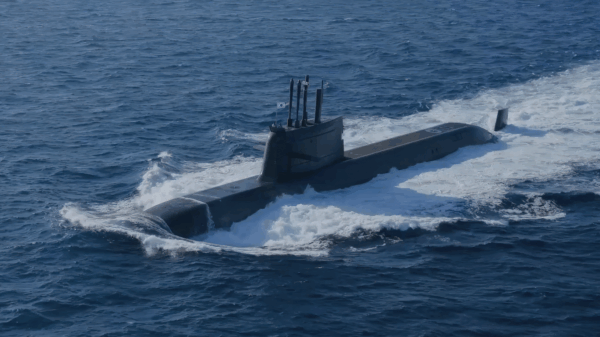

Seoul is reportedly preparing to announce a roadmap for its nuclear-powered submarine program, turning what was once a long-running strategic aspiration into a more immediate policy question. Naval nuclear propulsion raises non-proliferation questions about fuel, safeguards, and nuclear latency. But treating Seoul’s pursuit only as a sign of hidden nuclear ambitions risks missing the larger issue: whether a U.S. ally facing a rapidly nuclearizing North Korea can remain non-nuclear while still believing that it has enough means to defend itself.
That question has become more urgent as North Korea expands not only its nuclear arsenal, but also the ways it might deliver nuclear weapons. Pyongyang is trying to strengthen its sea-based nuclear capabilities, and suspicions have grown that Russia has provided, or might provide, technologies or materials to support North Korea’s own nuclear-powered submarine program. In this environment, simply telling South Korea what it should not do is unlikely to be enough. The harder question is how South Korea can strengthen deterrence while remaining non-nuclear.
In fact, Seoul has long had its own answer to that question. It has pursued what might be labelled “conventional sufficiency,” a logic that seeks to uphold non-proliferation norms while deterring North Korea through U.S. extended deterrence and South Korea’s own strategic conventional capabilities. This adds an additional layer of explanation for why South Korea’s foreign policy elites have remained relatively cautious about nuclear armament despite persistent public support for an independent nuclear arsenal. Its caution has reflected the diplomatic, economic, and alliance-related costs of nuclear armament. But it has also rested on an internally coherent belief that South Korea can remain non-nuclear if its conventional deterrent remains credible. That logic has been backed by investments in military capabilities designed to make North Korean nuclear use costly, risky, or unlikely to succeed.
Seen this way, nuclear-powered submarines could strengthen rather than weaken the logic of South Korea not going nuclear. They would not fully remove South Korea’s vulnerability to North Korean nuclear weapons. But by improving endurance, survivability, and operational flexibility at sea, they could make Seoul’s non-nuclear deterrent posture more credible and politically sustainable.
This is also why calls for South Korea to tone down elements of Kill Chain are so difficult to accept in Seoul. Kill Chain is South Korea’s conventional strategy for detecting signs of an imminent North Korean attack and striking key targets before that attack can be carried out. The argument for restraint is that such capabilities may heighten North Korea’s fear that it must use nuclear weapons early in a crisis or lose them. That concern is understandable. But Kill Chain is not just a military option. It is part of the political and strategic justification for the claim that South Korea can deter North Korea without nuclear weapons. Asking Seoul to scale it back could sound, however strong the South Korea-U.S. alliance may be, like asking the country to rely almost entirely on external guarantees for its own security.
This is the paradox at the heart of the issue. If Seoul is told not to acquire nuclear weapons, but also discouraged from developing the advanced non-nuclear capabilities it considers necessary, the domestic case for nuclear restraint becomes harder to sustain. Kenneth Waltz’s observation that external opposition is rarely the most decisive factor in preventing a state from going nuclear is useful here. The point is not that South Korea is bound to go nuclear. It is that non-proliferation is stronger when restraint is politically sustainable, not merely externally demanded. If Washington and the broader non-proliferation community want South Korea to remain non-nuclear, it may be worth asking whether framing opposition to Seoul’s nuclear-powered submarine push primarily as a proliferation problem could actually weaken the case for restraint. Some forms of allied capability enhancement may actually help sustain non-proliferation by making non-nuclear deterrence more credible.
This does not mean South Korea should receive a blank cheque. A nuclear-powered submarine program would need to be handled with exceptional care, including clear reaffirmation of Seoul’s commitment to the Non-Proliferation Treaty, greater transparency on nuclear fuel and safeguards, and a clearly defined military purpose. But treating efforts to make South Korea’s non-nuclear deterrent more credible as proliferation problems may end up weakening the restraint that non-proliferation policy is meant to preserve. Non-proliferation is better served when restraint is something a state can sustain with confidence, not merely something it is asked to accept.
Author

Related Posts
Iran war live: Tehran says US must ensure Israel ends attacks on Lebanon
Iranian deputy foreign minister says Iran ‘ready to move forward’ on diplomacy with US, but war must end on all fronts.
Read out all
In pictures: Thai Princess Bajrakitiyabha dies at age 47
Thailand's royal household has announced the death of Princess Bajrakitiyabha, the eldest daughter of King Vajiralongkorn, at the age of 47. She...
Read out all
Japan raises interest rate to highest for 31 years
Japan's central bank has increased its main interest rate to a new 31-year high after a surge in global energy prices. On...
Read out all
A year on, six questions still haunt the Air India crash investigation
A year after Air India Flight 171 to London crashed into a medical college campus moments after take-off from the western Indian...
Read out all
Delhi’s temperature showed 43.5C. Why did it feel hotter?
For several weeks now, the Indian capital, Delhi, has been battling a severe heatwave, with temperatures routinely rising above 40C. The real...
Read out all
Vincent’s parents ‘never say he’s good enough’ – so he turned to a middle-aged couple online
During mealtimes, Vincent Zhang, a tech worker in Shanghai, has a habit of whipping out his phone to check on his "virtual...
Read out all