


India’s extreme heat takes a toll on workers as experts urge long-term solutions
From daily-wage labourers to small business owners, millions are struggling to cope with soaring temperatures of beyond 40°C while trying to earn a living.
A mother and her child shelter under an umbrella during a heatwave in New Delhi.
New: You can now listen to articles.

This audio is generated by an AI tool.


NEW DELHI: For small business owner Himanshu Kumar, closing his shop during a heatwave is not an option.
The travel agency owner, who operates in the heart of New Delhi, told CNA that soaring temperatures are making it increasingly difficult to work – but staying home would mean losing income.
“It is impossible to have an air conditioner here (in the shop). I don’t earn enough. There’s a water cooler and a fan but that just pushes hot air around,” he added.
“If I close the shop and stay at home, I lose money. I can’t do that.”
Kumar’s predicament is shared by millions across India as large parts of the country endure temperatures above 40°C – the threshold for a heatwave being officially declared in plains, or about 4.5°C to 6°C above normal, according to the India Meteorological Department.
Heatwaves are forecast for the northern and western regions, though Delhi residents got some respite on Tuesday (Jun 9) as rain fell across parts of the capital.
While extreme heat is a familiar feature of Indian summers, studies show heatwaves are becoming more intense and frequent in the world’s most populous nation.
Authorities have rolled out heat action plans, and Prime Minister Narendra Modi has urged Indian citizens to take precautions.
But experts warn that emergency measures alone will not be enough to protect the country’s vast population from worsening heat risks.






MOST VULNERABLE TO HEAT STRESS
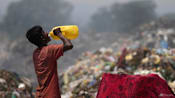
Research has shown that India is among the countries most vulnerable to heat stress – a condition in which the body is unable to cool itself sufficiently.
The economic impact is also mounting. According to medical journal The Lancet, India lost an estimated 247 billion potential labour hours in 2024, with informal workers and small business owners among those most affected.
For outdoor workers, the dangers are particularly acute. A World Bank study estimated that up to three-quarters of India’s workforce is engaged in heat-exposed labour.
Government guidelines advise people to avoid being outside during the hottest parts of the day. Time away from work for daily-wage earners, however, often means lost income.
Many seek relief at cooling centres set up across cities where they can rest briefly, drink cold water and cool down before returning to work.
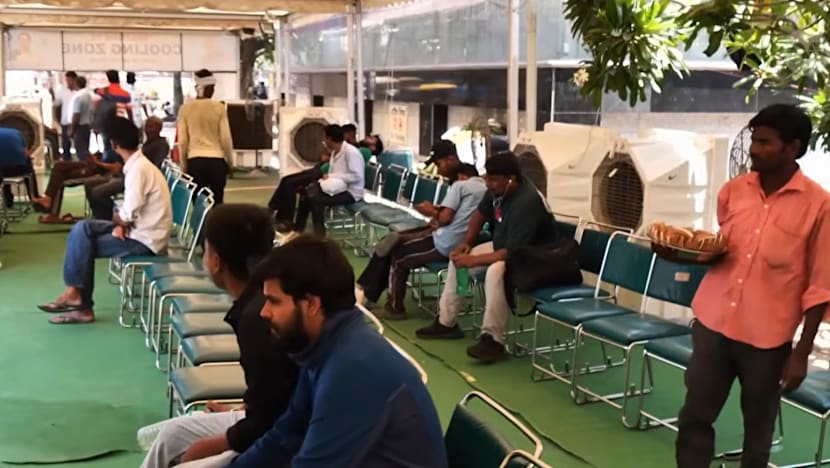
“Every time I pass this cooling centre, I sit down for a bit to rest. I spend about 30 minutes and then get back out there in the heat again,” said salesman Parvesh Kumar Yadav.
Heatwaves are becoming longer, stronger and more frequent, according to India’s weather department. A recent study predicted the country could experience up to 40 additional unusually hot days each year over the next two decades.
Experts blame climate change and rapid urbanisation of cities and towns, which creates urban heat islands where built-up areas trap heat.
The effects persist well into the night. In many areas, temperatures remain around 30°C after sunset, giving people little opportunity to cool down and recover.
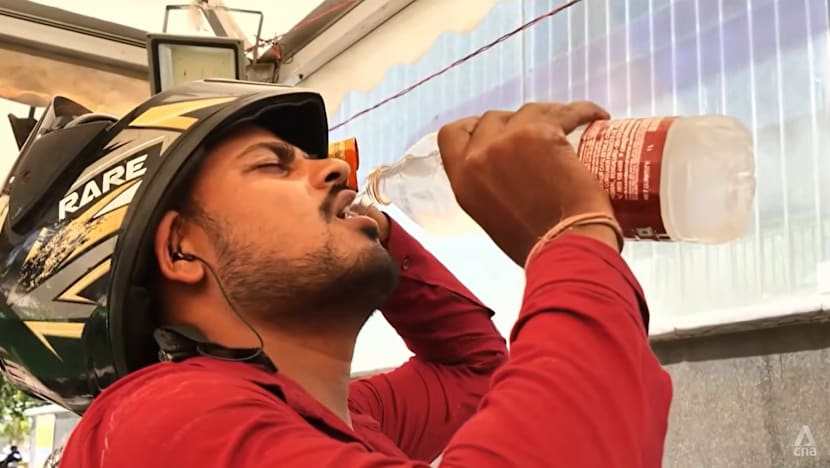
A study by the non-profit Council on Energy, Environment and Water found that more than 76 per cent of India’s population faces high to very high risk from extreme heat.
Researchers have also warned that parts of South Asia could eventually face heat and humidity levels that approach the limits of human survival.
Delhi’s regional government recently announced plans to develop 100 new parks and plant 1.4 million saplings as part of efforts to increase green cover and mitigate rising temperatures.
HEALTH CONSEQUENCES
Medical professionals are increasingly concerned about the health consequences of extreme heat.
At Ram Manohar Lohia Hospital in New Delhi, doctors – who are running a first-of-its-kind dedicated heat stroke unit in northern India – said rapid cooling is the only thing that can save lives during a heatwave.
While ice immersion therapy is the fastest way of cooling, it needs to be done under medical supervision.
Most of the hospital’s patients are admitted in an unconscious state, noted its head of emergency medicine Amlendu Yadav.
“The usual mortality of a heat stroke patient is 80 per cent if a patient doesn’t get treatment, but if the patient gets timely, adequate treatment, this mortality can be brought down to just 10 per cent. And in 2024, our mortality data was 27 per cent,” he added.
The hospital treated more than 75 heat stroke patients in 2024, which was the last year temperatures reached similarly dangerous levels.
Dr Yadav said he fears that number could be even higher this year.
While measures such as cooling tents and specialised heat wards are welcome, experts argue that heat plans in India are focused more on emergency responses than on long-term changes to make cities heat-resilient.
Dr Radhika Khosla, research director at the Oxford India Centre for Sustainable Development and co-author of a recent Oxford University study, said policymakers should rethink urban design.
The study found that India is likely to be among the countries with the largest populations exposed to extreme heat if climate change continues to worsen in the coming decades.
“Are there low-cost solutions which … have existed for a long time that enable shading, ventilation, access to green spaces, access to water?” she questioned.
“I think if we act now and quickly, we can save ourselves a lot of damage.”




Author

Related Posts
Iran war live: Tehran says US must ensure Israel ends attacks on Lebanon
Iranian deputy foreign minister says Iran ‘ready to move forward’ on diplomacy with US, but war must end on all fronts.
Read out all
In pictures: Thai Princess Bajrakitiyabha dies at age 47
Thailand's royal household has announced the death of Princess Bajrakitiyabha, the eldest daughter of King Vajiralongkorn, at the age of 47. She...
Read out all
The unknown man in my mother’s coffin: A year after Air India crash, families still waiting for answers
Miten Patel remembers the day hospital staff in Ahmedabad drew two vials of his blood to help identify his parents. He had...
Read out all
Japan raises interest rate to highest for 31 years
Japan's central bank has increased its main interest rate to a new 31-year high after a surge in global energy prices. On...
Read out all
A year on, six questions still haunt the Air India crash investigation
A year after Air India Flight 171 to London crashed into a medical college campus moments after take-off from the western Indian...
Read out all
Delhi’s temperature showed 43.5C. Why did it feel hotter?
For several weeks now, the Indian capital, Delhi, has been battling a severe heatwave, with temperatures routinely rising above 40C. The real...
Read out all