

- 0
- 1,282 word
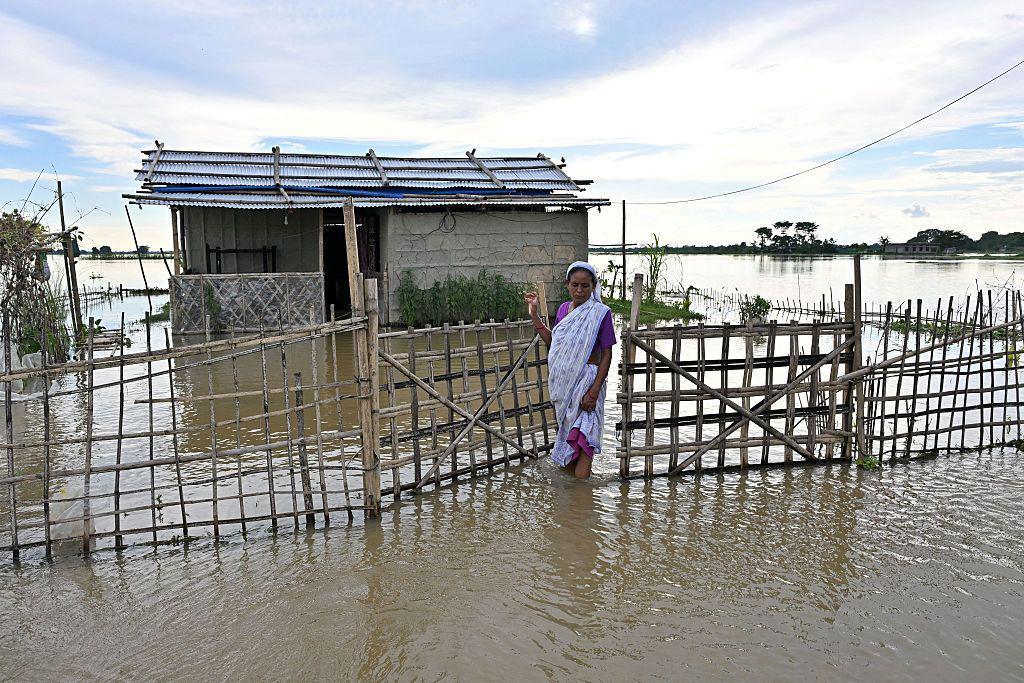 Image source, AFP via Getty Images
A woman wades through floodwaters outside her inundated house at a village in Assam’s Sivasagar
-
Published
Well past midnight on 19 July, as floodwaters surged through a village in India’s northeastern state of Assam, Bornali Baruah and her husband were trying to save his 97-year-old mother.
Almost bedridden, Lokada Duarah could not walk. There was no boat, no rescue team and no neighbour available to help. So they lifted her onto a makeshift raft made of banana trunks, and carried her through the rushing water towards safety.
“Everyone was trying to save themselves,” Baruah says.
An hour later, she says, the three of them reached a shelter camp on a national highway some distance away from their house in Charing village in Sivasagar district, one of the worst flood-affected districts.
The water was three to four feet deep and the current so strong that they had to move slowly, holding each other’s hands and using sticks to steady themselves.
By then, Baruah’s home was disappearing beneath the flood. The water would eventually rise to about five feet inside it.
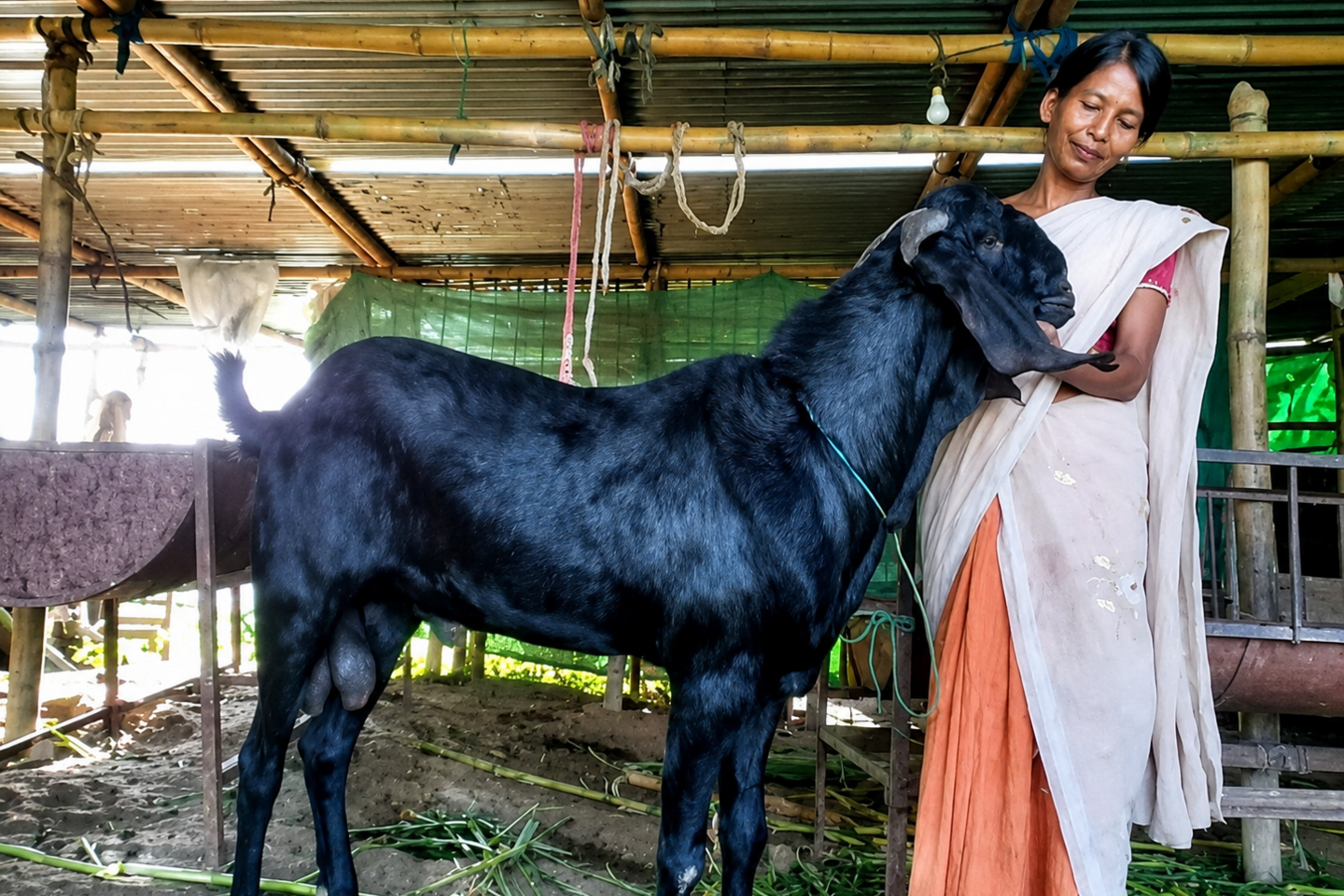
Baruah quit journalism to concentrate on animal husbandry
The scene in Charing was part of a much wider disaster unfolding across Assam.
The latest figures put the death toll from floods at 100, with 10 districts and 456 villages affected and about 140,000 people impacted. Fifty-two relief camps have been set up. Overall, the floods have affected nearly 1.2 million people across 25 districts, damaged more than 19,000 houses and left more than 75,000 people in 252 relief camps.
The floods have been particularly severe in parts of Upper Assam, where villages like Charing that do not usually flood have been inundated.
For Baruah, 40, the shock is especially profound.
“This is the first flood we have experienced in this area in our lifetime,” she says.
Baruah has lived in Charing since birth, and her ancestors lived here before her. She recalls hearing about a major flood in 1950, long before she was born, but nothing like this had happened during her lifetime.
Her home sits in a landscape criss-crossed by rivers, though none runs immediately beside it. The single-storey, eight-room house is about 25km (15 miles) from Sivasagar town; the Brahmaputra is roughly 20km away, the Dikhow 12km, the Jhanji 10km and the Mitong just 5km.
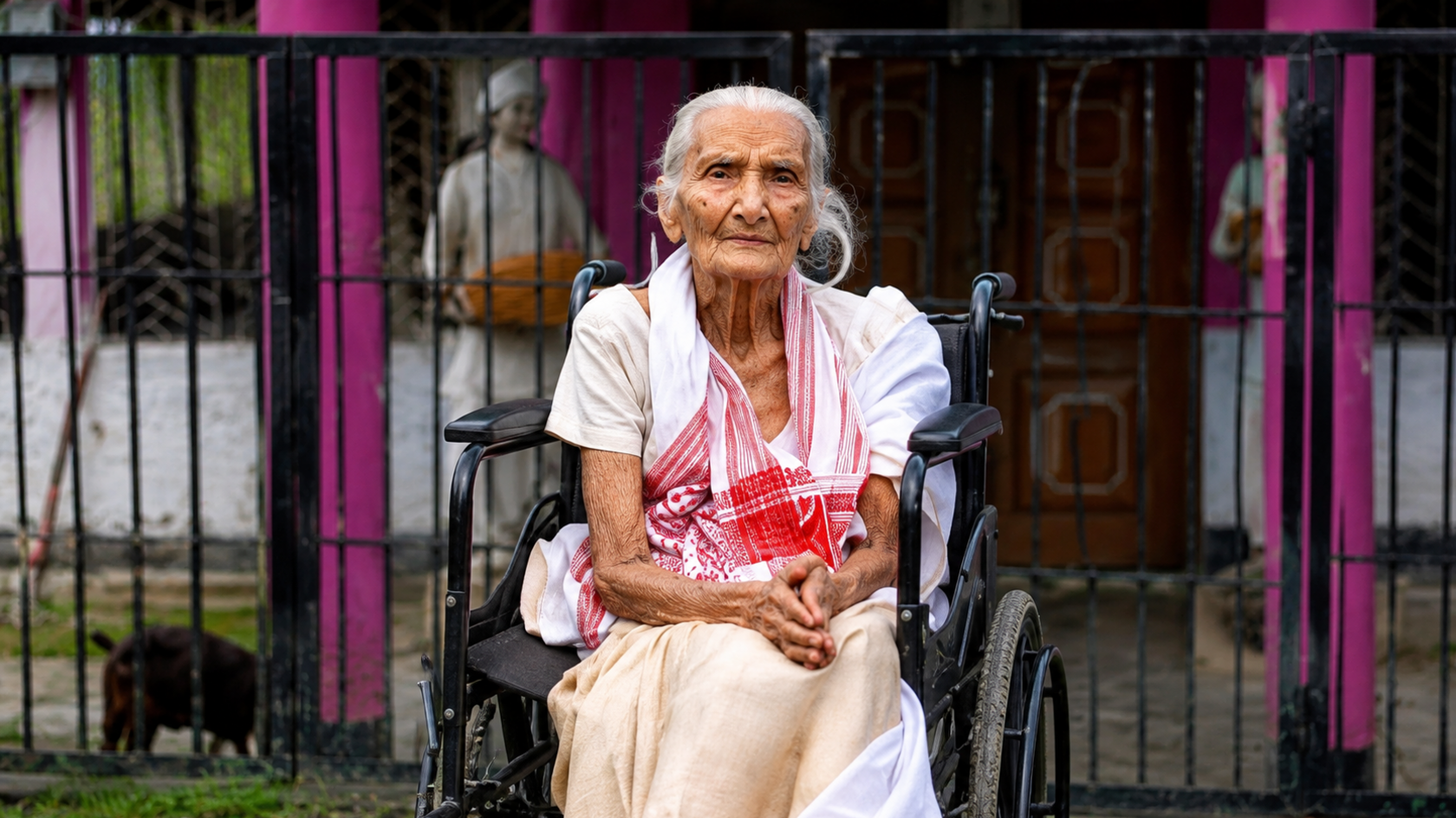
A 97-year-old Lokada Duarah was carried onto a banana tree trunk and taken to safety after floodwaters rose around her home
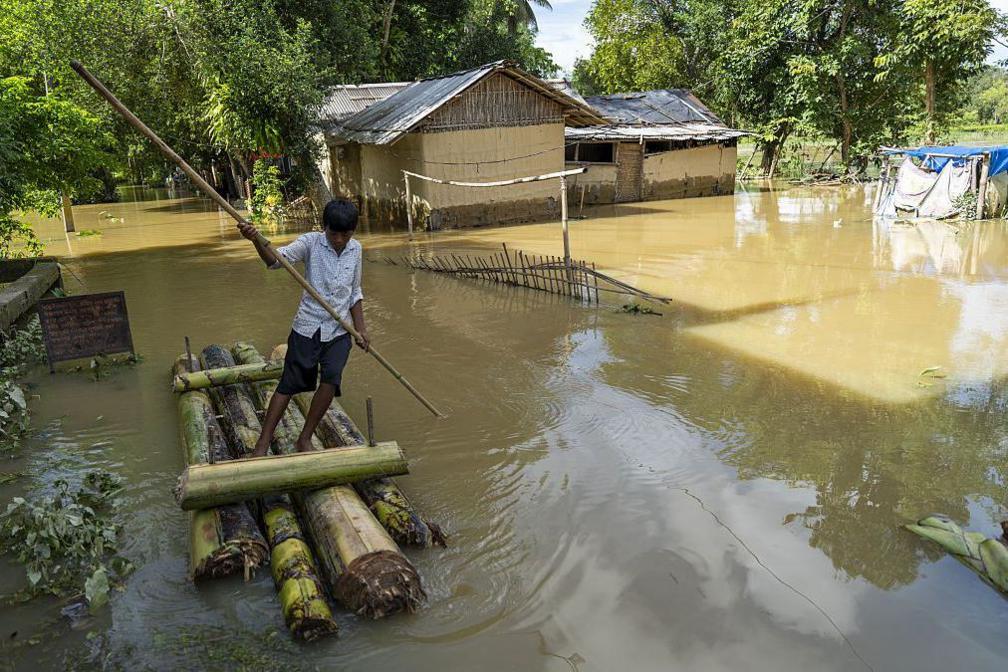 Image source, Anadolu via Getty Images
A boy uses a makeshift banana raft to navigate floodwaters in Assam
She had never imagined the water would reach her doorstep. But when it did, the flood threatened not only her home, but the livelihood she had spent years building.
Baruah was once a full-time journalist. In 2016, she left the profession to take up animal husbandry, and three years later was named Assam’s ‘Best Livestock Farmer’.
Her farm grew to around 300 goats, 500 ducks and 1,000 chickens, along with fish. The flood destroyed much of it.
She says she lost most of her goats, 300 ducks, 300 chickens and a sizeable amount of fish, as well as the machine she used to make animal feed. Furniture, laptops, vehicles and the family’s collection of books were also destroyed.
None of her livestock was insured. “There is no insurance system here for livestock, especially goats,” she says.
The first warning came on 17 July, when the Jhanji river began to rise. Two days later, the Dikhow and Mitong spilled into surrounding areas as the Brahmaputra and its tributaries swelled rapidly.
Several rivers breached their embankments, Baruah says, sending powerful currents through towns and villages.
About a day after the water began rising, she and her family abandoned their home. By then, the water inside the house was four feet deep. They spent the next 10 days in a relief camp.
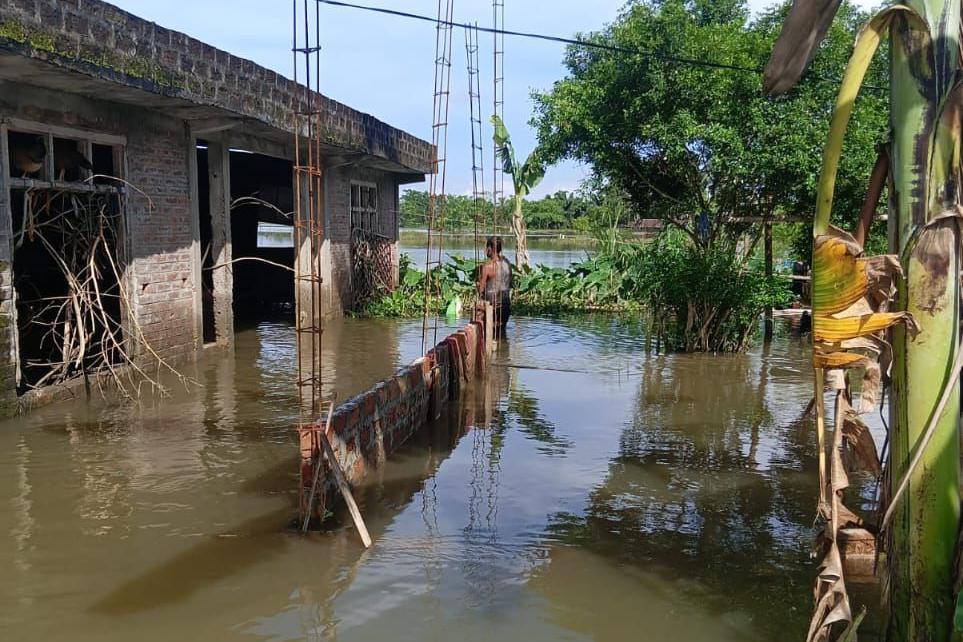
Baruah and her family abandoned their home nearly a day after the water began rising
For five days in the camp there was no electricity or mobile connectivity and Baruah could not even charge her phone. The government provided the family with a relief kit containing rice, lentils and cooking oil.
Help also came from strangers at the camp. A young woman whom Bornali had never met, helped with food, cleaning and looking after her 60 surviving goats. Another took responsibility for treating and feeding animals that had fallen ill.
But why did the water reach a place that Baruah says had never flooded before?
Dhrubajyoti Sahariah, a professor of geography and director of the Centre for Brahmaputra Studies at Gauhati University, says flooding itself is natural in the Brahmaputra Valley, a lowland region in Assam. What has changed is the “frequency, intensity and severity of floods well beyond historical norms”.
The Brahmaputra, one of the world’s largest multi-channel rivers, ranks among the top five globally for both water discharge and sediment load. Much of that sediment comes from Tibet, where the river originates.
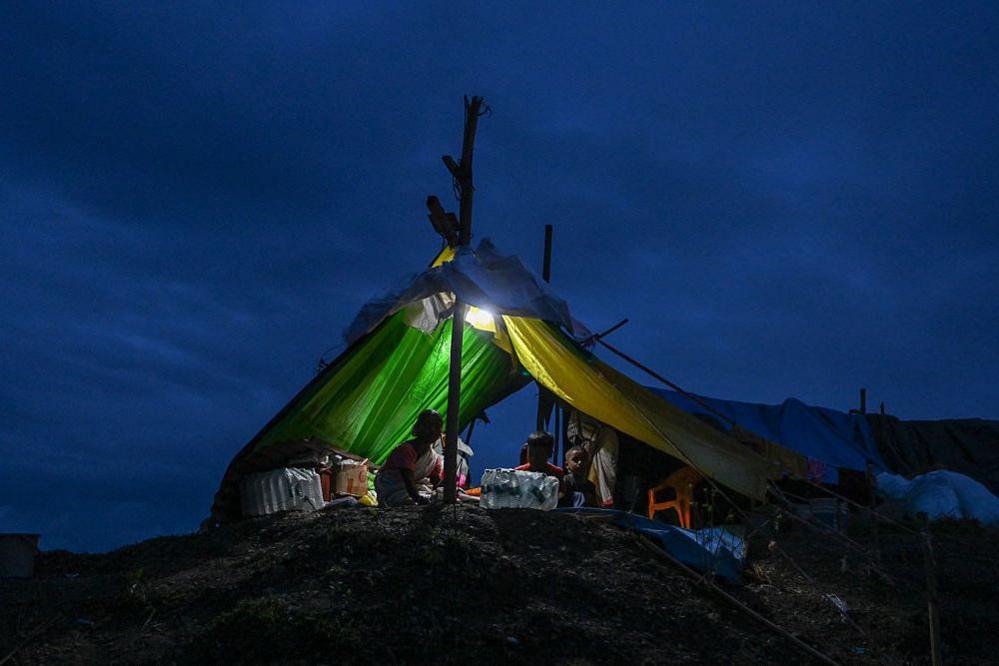 Image source, Getty Images
A family shelters inside a tent in Sivasagar district, among more than 5,000 people lodged in 252 relief camps
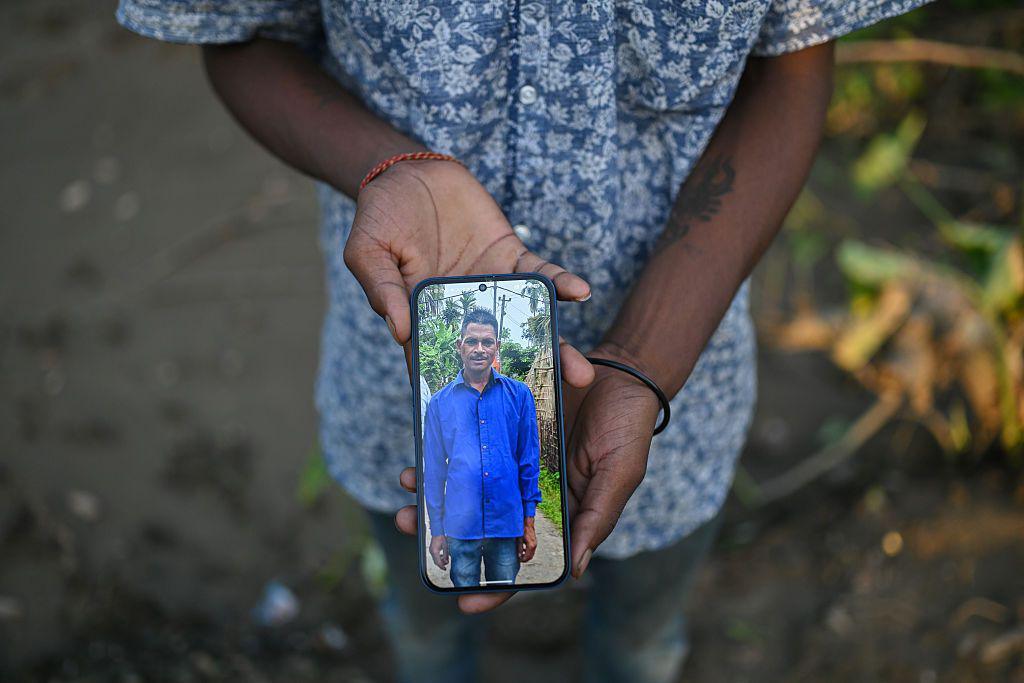 Image source, Getty Images
Amit Giri holds a photo of his father, Siv Sankar Giri, who died in the floods, outside their damaged home in Sivasagar. He is among 100 people killed in the floods.
As it enters Assam’s vast floodplains, home to some 28 million people and hemmed in by hills, it slows and deposits sediment, fuelling erosion and floods. Flooding is an annual feature of life in Assam, but some years are far worse: the 2004 floods alone affected 12 million people and killed 251.
In the recent floods, Sahariah says, continuous heavy rainfall in Upper Assam and neighbouring Nagaland’s Mon district triggered severe flooding and large-scale silt deposition in Sivasagar, Charaideo and Jorhat.
Sahariah says floods are reaching areas once spared because more people have settled on active floodplains, forests have been cleared, mining and hill-cutting have increased sediment in rivers, and roads, bridges and other infrastructure have been built without adequately accounting for the region’s hydrology.
Yet Assam cannot manage the Brahmaputra on its own. Many of its tributaries originate in the surrounding hill states, while flood-control measures are largely planned within Assam.
“What is needed is basin-scale planning,” Sahariah says, along with greater coordination between states and better understanding of the rivers’ changing geography.
For Baruah, however, the science has become painfully personal.
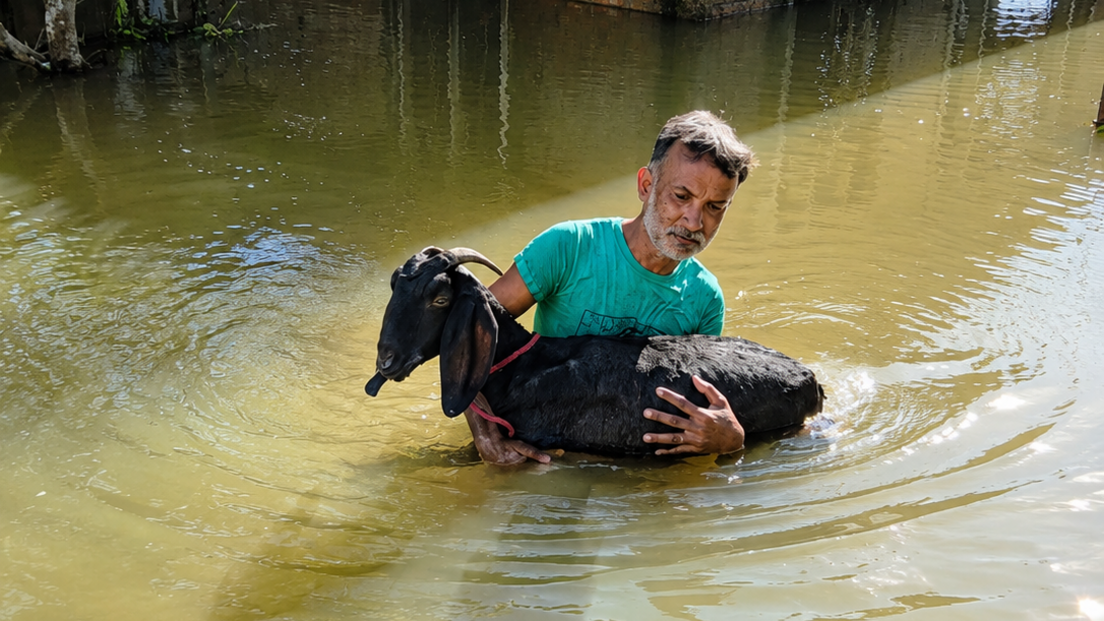
Only 60 of Baruah’s goats survived the floods
She has returned to the area around her flood-damaged home. For now, she and her family are staying at a neighbour’s house nearby, hoping to move back into their own home within a week.
Baruah says she does not intend to leave Charing. Moving away, she says, requires economic and social circumstances that her family simply does not have.
So she is beginning to think about how to live with a threat that was, until now, largely absent from her life.
She says that if heavy rain comes again, she would need to raise the house higher, perhaps by building up its foundation. She is not yet sure how she would manage it or pay for it. The family would also need a raised platform where they could retreat to safety, and they would stock food and drinking water in advance.
Baruah is learning to live with the possibility of more floods – and to prepare for them. Did she feel like a climate refugee?
“No. If we regain our economic and mental strength, life will return to the way it was before.”
“We will have to learn to coexist with the floods.”
Related topics
Author
