

Oil slips 5% on hopes of US-Iran deal
Oil prices fell to a two-week low on optimism that the US and Iran were moving closer towards a peace deal, even though they remained at odds over key issues.
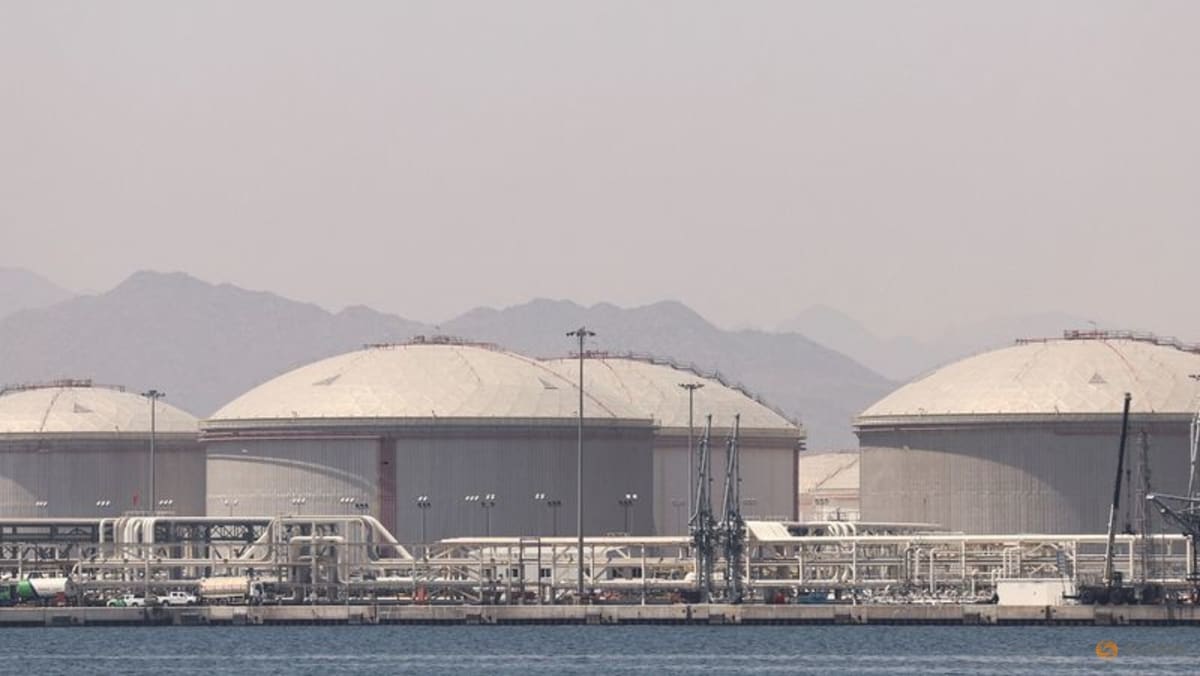
Oil containers at the Port of Fujairah, as the US-Israel conflict with Iran limits marine traffic in the Strait of Hormuz, in Fujairah, United Arab Emirates, May 6, 2026. (Photo: REUTERS/Amr Alfiky)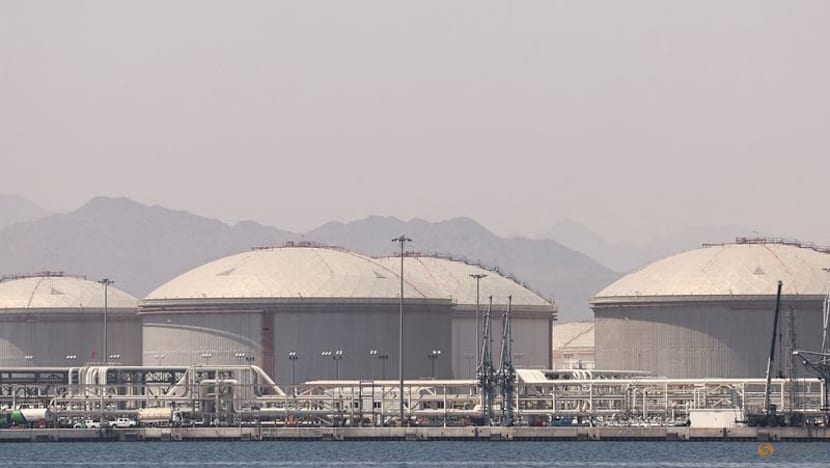
SINGAPORE: Oil prices hit two-week lows on Monday (May 25) on optimism that the United States and Iran were moving closer towards a peace deal, even though they remained at odds over key issues, including blockades on the Strait of Hormuz that continued to restrict oil supply from the Middle East.
The price of North Sea Brent crude and West Texas Intermediate slipped close to 5 per cent to US$99.41 and US$92.49 a barrel, respectively.
Tokyo soared more than 3 per cent in early trade on Monday, while Hong Kong and Seoul were closed for public holidays.
Shanghai inched upwards, with Taipei, Manila, Bangkok, Jakarta, Singapore, Sydney and Wellington also climbing.





Kuala Lumpur was down 0.1 per cent.
But sticking points in their negotiations have tempered hopes of a swift resolution to restore the transit of oil and gas through the Strait of Hormuz.
US President Donald Trump said on Sunday he had informed US negotiators “not to rush into a deal”.
One of the main sticking points has been whether Tehran is willing to hand over its stockpile of highly enriched uranium.
The release of Iran’s frozen assets held under longstanding US sanctions and whether Lebanon, repeatedly targeted by Israeli strikes, will be included in any peace deal are also key issues.


Nick Twidale, chief market analyst at ATFX Global, said that he expects the market to embrace more risk on Monday but not to surge higher until there is confirmation that the Strait of Hormuz will reopen.
“We will need to see an agreement out in place in the coming sessions as we know there are still some major sticking points,” he said.
The most important issues for financial markets are when the Strait of Hormuz will reopen, Commonwealth Bank of Australia strategists said in a note.
“Under what conditions the Strait will reopen and how long it will take to repair production facilities and infrastructure to ramp up production of energy and other goods to pre‑war levels,” they said.
MST Marquee analyst Saul Kavonic said: “Notwithstanding all the caveats and risks that remain to the peace deal and Strait of Hormuz, there is now some light at the end of the tunnel, which will bring some near-term oil price relief.”
However, analysts expect that it will take months for oil flows through the strait to return to normal and for damaged oil and gas facilities to be repaired.
Investors will also be keeping an eye on how the US Federal Reserve and its new chief chair Kevin Warsh react to Personal Consumption Expenditures (PCE) data this week, as well as European inflation metrics.
“The inflation story remains central to the entire setup,” said SPI Asset Management analyst Stephen Innes.
“Investors will receive another critical read on Thursday with the release of the Personal Consumption Expenditures index, the Federal Reserve’s preferred inflation gauge.
“After several hotter-than-expected consumer and producer inflation reports earlier this month, markets are increasingly concerned that elevated oil prices and supply disruptions tied to the Middle East conflict are beginning to seep into the broader inflation pipeline.”





Author

Related Posts
Iran war live: Tehran says US must ensure Israel ends attacks on Lebanon
Iranian deputy foreign minister says Iran ‘ready to move forward’ on diplomacy with US, but war must end on all fronts.
Read out all
In pictures: Thai Princess Bajrakitiyabha dies at age 47
Thailand's royal household has announced the death of Princess Bajrakitiyabha, the eldest daughter of King Vajiralongkorn, at the age of 47. She...
Read out all
The unknown man in my mother’s coffin: A year after Air India crash, families still waiting for answers
Miten Patel remembers the day hospital staff in Ahmedabad drew two vials of his blood to help identify his parents. He had...
Read out all
Japan raises interest rate to highest for 31 years
Japan's central bank has increased its main interest rate to a new 31-year high after a surge in global energy prices. On...
Read out all
A year on, six questions still haunt the Air India crash investigation
A year after Air India Flight 171 to London crashed into a medical college campus moments after take-off from the western Indian...
Read out all
Delhi’s temperature showed 43.5C. Why did it feel hotter?
For several weeks now, the Indian capital, Delhi, has been battling a severe heatwave, with temperatures routinely rising above 40C. The real...
Read out all